
What makes a mileage claim reviewable?
A reviewable claim identifies the employee, travel date, business purpose, relevant visit or trip, claimed distance, company-policy rate and approval decision. Available GPS evidence helps explain the journey, but it does not make the whole recorded distance automatically reimbursable.
The reviewer checklist
- Confirm employee identity, date, vehicle context, and business purpose.
- Check whether the claim covers one trip, a work session, or a period total.
- Confirm the distance unit before applying a policy rate.
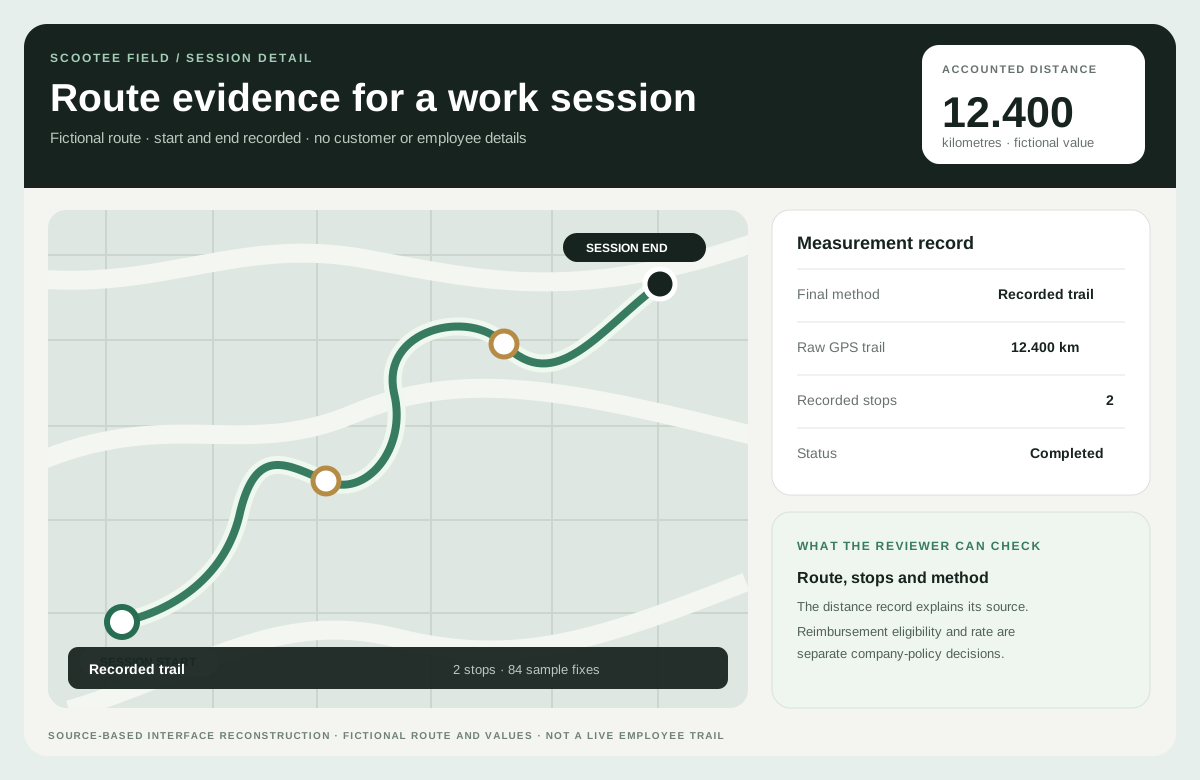
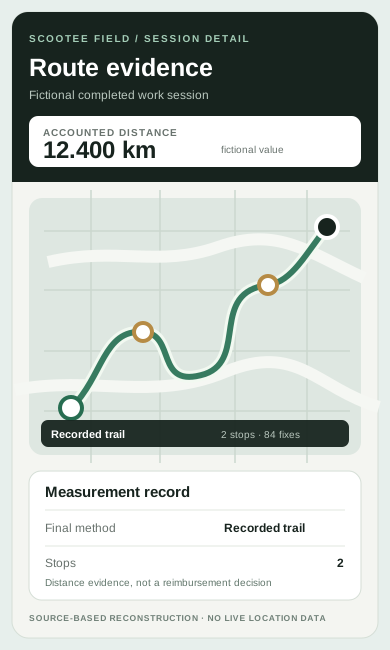
- Compare claimed distance with the available route and session records.
- Identify personal travel, commuting, duplicate segments, or unexplained gaps for review under your policy.
- Check whether fuel, mileage allowance, tolls, and parking may be claimed together; do not reimburse the same cost twice.
- Match any business advance against the approved report.
- Record the approved amount, reviewer, reason for changes, and reimbursement status.
Worked example: company policy, not a legal rate
Suppose a company uses an illustrative allowance of 5 local-currency units per approved business kilometer. An employee submits 80 eligible kilometers, parking of 120 and a business advance of 250. The distance allowance is 400, the approved total is 520 and the balance after the advance is 270. This is arithmetic for a company policy example, not a statutory rate, tax calculation or legal reimbursement requirement.
Handle incomplete evidence honestly
GPS can be incomplete because of network conditions, disabled permissions, device restrictions, or interrupted sessions. Ask for the employee's explanation and other available evidence. Do not draw a perfect route that was never recorded or label an estimate as verified mileage.
Keep policy and evidence separate
The route describes recorded movement. The company policy determines eligible travel and allowance treatment. The approval records the decision. Payment status describes settlement. Combining these into one unexplained number makes later reconciliation difficult.
Questions for a software demonstration
- Can the employee see the distance and period being claimed?
- Can the reviewer inspect the underlying session rather than only a total?
- Can a returned claim retain its history?
- Can finance distinguish approved claims from paid or reconciled ones?
- How are duplicate sessions and already-claimed travel handled?
Explore mileage reimbursement software or inspect GPS distance evidence.